Guest article by Rosie Buckley, freelance writer | October 2026
Blindness Awareness Month is an opportunity to raise awareness of sight loss and support people adjusting to changes in their vision in the month of October.
Sight loss affects more than 2 million people in the UK, and for many, it poses both practical and emotional challenges. But the right support, whether that’s home adaptations, equipment, or simply having someone to talk to, can make a real difference.
There’s more to sight loss than not seeing as clearly as before. Conditions such as cataracts, glaucoma and age-related macular degeneration can all affect vision in different ways, sometimes making everyday activities more difficult. Vision changes can affect all manner of everyday tasks, such as reading, cooking, shopping, travelling, and using technology.
While some people look for practical solutions early on, others need more time to process the change. Everybody adjusts differently, and there isn’t a single best way to respond, which is why personalised support matters.
Small changes at home can often help people with sight loss carry out everyday tasks with confidence.
Through our Equipment & Advice service here at Dorset Blind Association, we offer a range of aids to make living with sight loss easier. These include:
There’s no need to change everything right away; start by making adaptations for the most difficult tasks.
Technology can help people living with sight loss complete important tasks and stay in touch.
Many electronic devices have accessibility features that make them easier to use. These often include the ability to make text larger, increase contrast, control devices using voice commands, or have devices say what is on the screen.
However, having access to technology is only part of the solution. Although technology is used for so many aspects of modern life, there are still times when people need to go somewhere in person or seek support from others.
Travelling outside the home can become a serious challenge following vision changes, especially when tackling unfamiliar or busy environments.
Mobility support can help people learn new techniques for moving around safely, such as using a long cane. Walking with a cane requires a lot of coordination and concentration, and the right support can make acquiring these easier. Specialist mobility training can help people develop the skills and confidence needed to navigate their local area more independently.
Loved ones may also be able to help with getting around, but it’s important that the help provided is really wanted. People may welcome assistance in new environments, but prefer remaining independent in familiar places.
Deteriorating vision is often accompanied by a range of negative emotions. These may include shock, anxiety about the future, sadness, and anger at how unfair life seems.
Dealing with these strong feelings takes time, and support can be extremely valuable for those going through it.
Family and friends can help by lending a sympathetic ear, even if they’re not experts. Just having someone to listen can be very reassuring.
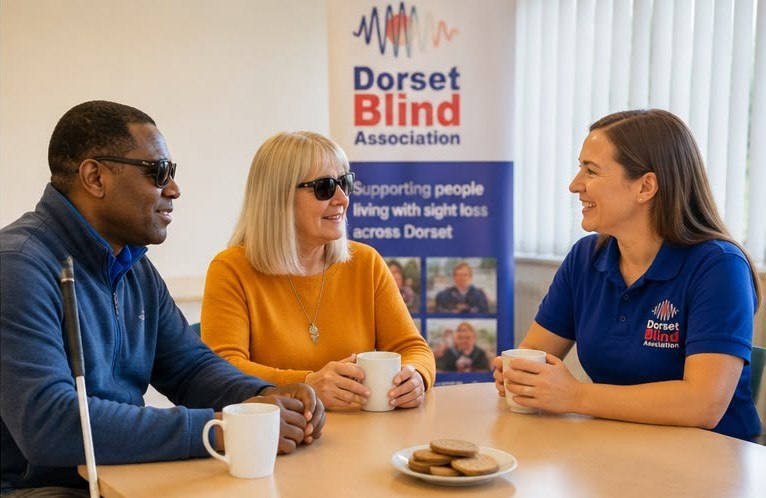
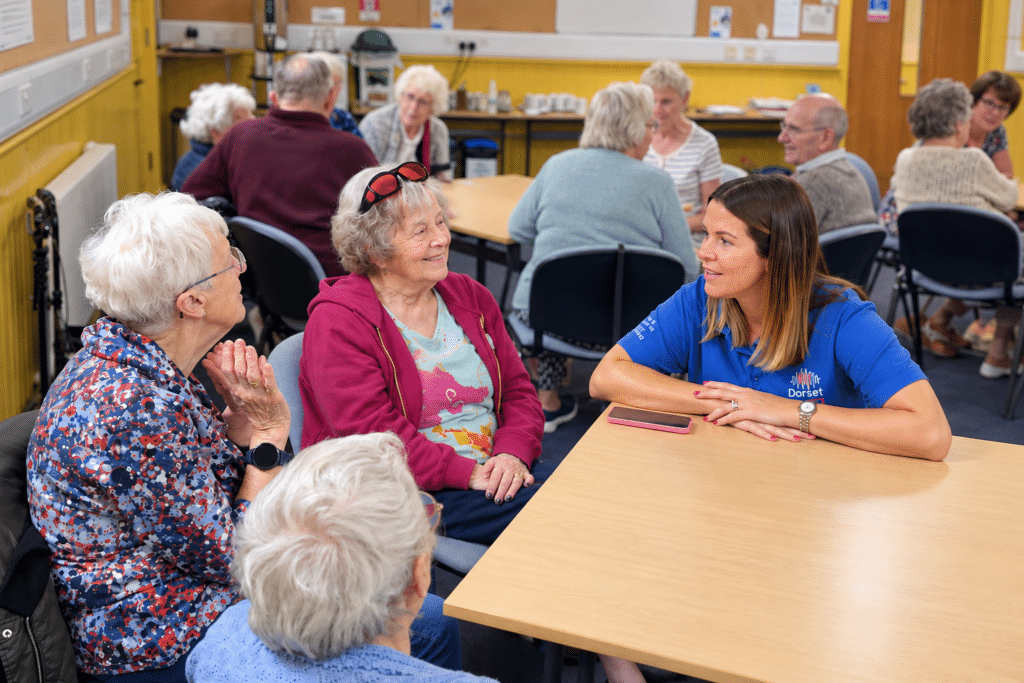
Professional or peer support can also be valuable. Dorset Blind Association support workers offer advice and support to Dorset locals living with sight loss, alongside our volunteer visitors, phone buddies, and range of social clubs and activities.
When someone is struggling, it can be tempting to step in and do things for them. However, this isn’t always what they want.
Asking “Would you like a hand?” or “Is there anything I can do to make this easier?” allows people to decide what support they need. They might want assistance with one part of a task while doing the rest themselves.
This can be particularly important when someone is adjusting to sight loss. The purpose of support should be to help people find ways of maintaining their independence, not to take it away..
Changes in vision can affect people in different ways. Some people may find certain social activities more challenging or feel less confident in unfamiliar settings, while others may be happy to carry on as usual with a few adjustments.
Friends and family can help by continuing to include people with sight loss when planning get-togethers, rather than assuming they won’t want to take part. Small, thoughtful adjustments can also make activities more comfortable and accessible, helping everyone feel welcome.
Many opportunities to meet other people and take part in activities are also offered by sight-loss support groups and organisations like Dorset Blind Association.
Adjusting to sight loss can take time, but the right support can make a real difference. At Dorset Blind Association, we support blind and partially sighted people across Dorset to live full and independent lives. From practical advice, specialist equipment and technology support to community support, social groups, activities and befriending, our services are shaped around the individual and what matters to them.
If you or someone you know is experiencing sight loss, please get in touch. Whether your sight has recently changed or you have been living with sight loss for many years, our friendly team is here to listen, talk through the support available and help you find what’s right for you.
About the author
Rosie Buckley is a freelance writer who kindly contributed this article to Dorset Blind Association for Blindness Awareness Month.
Find out more about Rosie’s work:
Follow Rosie on Instagram: @rosiewithapen